

Most ABA practices don’t fail because of bad clinical work. They fail because their billing falls apart.
When you’re juggling ABA-specific CPT codes, Medicaid authorization mismatches, and payer rules that shift every few months, even a small gap in your billing workflow can tank your clean claims rate. After reviewing the top ABA billing software options across practice management platforms, clinical tools, and revenue cycle features, this guide breaks down which platforms actually hold up under real operational pressure, and why integrated scheduling changes everything for practices that want to grow without bleeding cash.
The Real Impact of Top ABA Billing Software
Picking the wrong billing software for an ABA practice isn’t just an inconvenience. It sets off a chain reaction, starting with high denial rates and ending with stretched days in accounts receivable that slowly squeeze cash flow.
ABA billing is genuinely complex. Payer rules for CPT codes like 97153 and 97155 vary by state, by insurer, and sometimes by authorization batch. When your billing tool doesn’t reflect those nuances, you’re submitting claims into a system that’s already primed to reject them.
Specialized platforms built for ABA understand this. They account for supervision ratios, therapist credentialing requirements, and the specific authorization utilization patterns that payers flag.
That specificity makes a measurable difference. Practices using purpose-built tools tend to see stronger clean claims rates, lower denial rates by payer and CPT code, and tighter control over days in A/R. And when billing and scheduling run off the same data layer, the margin for documentation errors shrinks considerably.
Comparing the 5 Best ABA Software Platforms
1. Theralytics – Best for Clinical Operations and Organizational Alignment
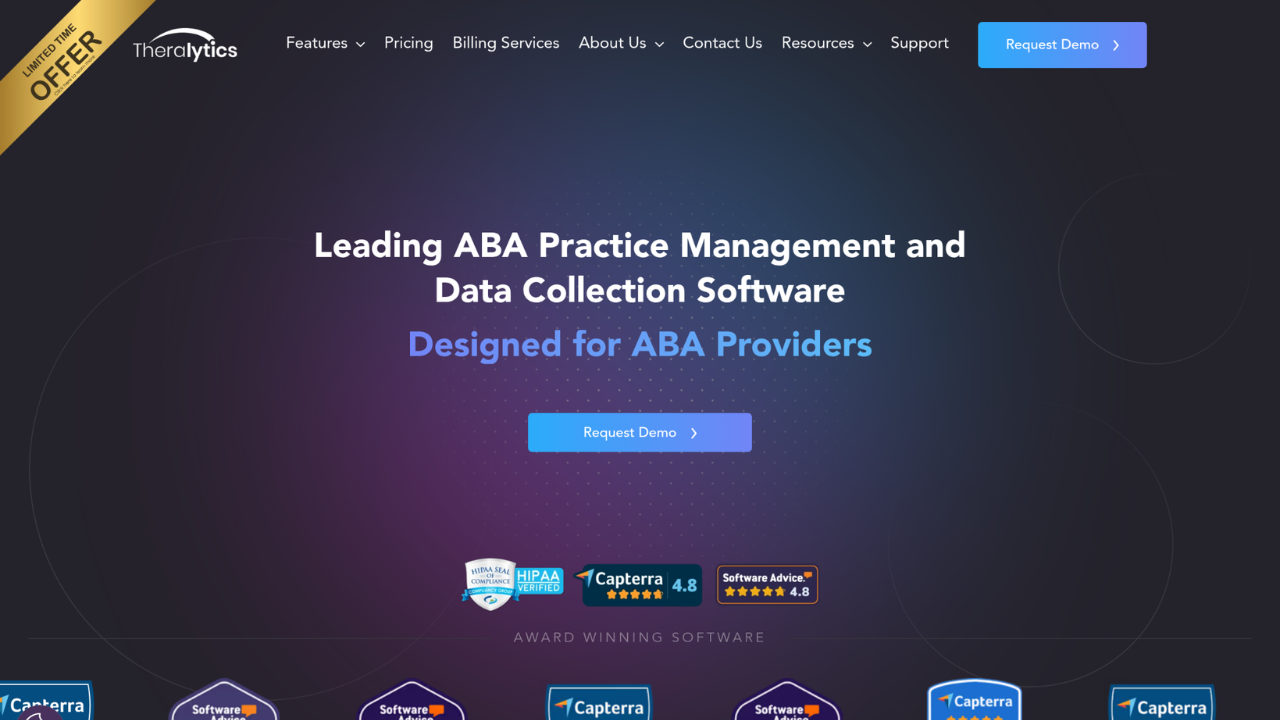
What Services Does Theralytics Provide?
Theralytics is a practice management and clinical data platform built for ABA and healthcare providers. Their system connects real-time data collection, automated progress monitoring, and unified scheduling in one place. Practices that rely on their ABA therapy software get automated graphing, offline-capable data entry, and a shared data layer that keeps BCBAs, supervisors, clinicians, and caregivers working from the same current information. The platform also meets 2026 HHS technical safeguard requirements, with SOC 2 Type II certification and AES-256 encryption built in.
What Sets Theralytics Apart for Top ABA Billing Software?
The biggest problem Theralytics solves is the operational silo, where clinical data and billing data live in separate systems that never quite sync, creating documentation gaps that fuel claim denials. Their real-time synchronization means the data that powers scheduling and care delivery is the same data that feeds billing. That’s exactly the kind of tight loop that keeps clean claims rates healthy.
Real User Sentiment:
Theralytics stands out for merging clinical and administrative workflows in a way that actually feels intuitive rather than bolted together. From what the reviews show, clinicians get up to speed quickly, which matters a lot in practices dealing with high staff turnover. The flexible pricing is a consistent standout, especially for growing practices that don’t want to pay enterprise rates before they’re ready.
2. CentralReach – Best for ABA Therapy Practices and Autism/IDD Care Providers
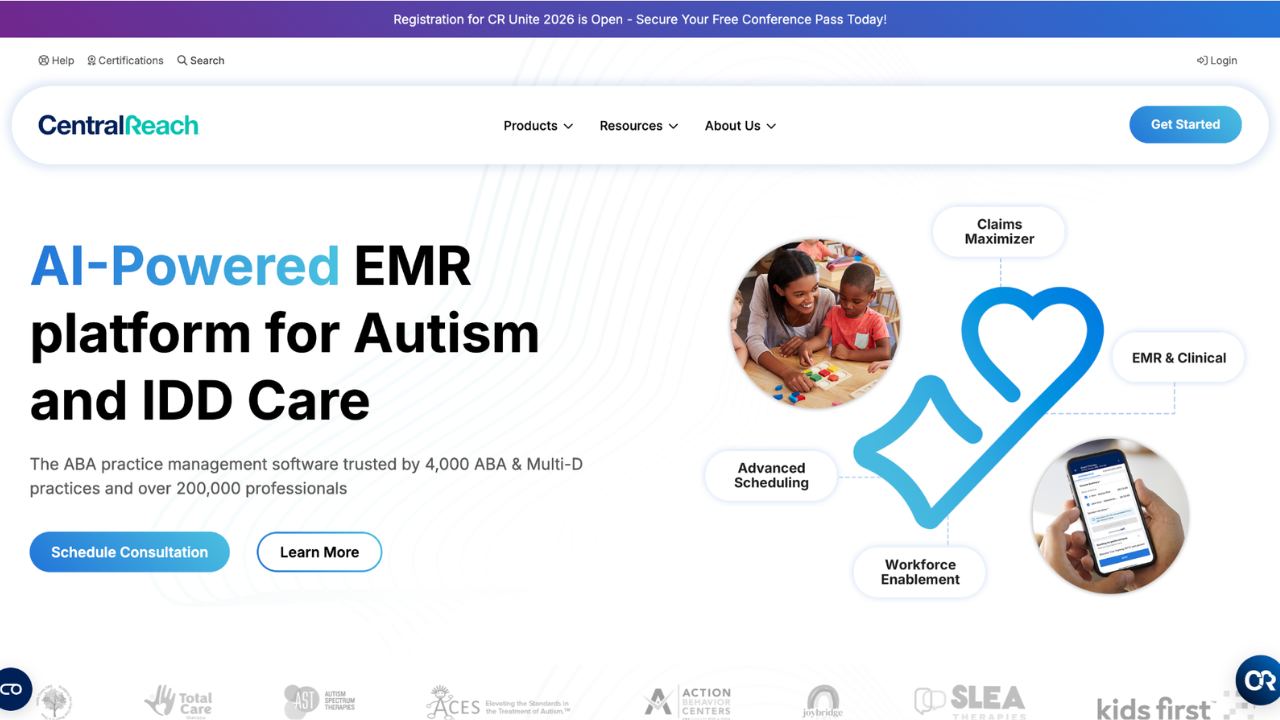
What Services Does CentralReach Provide?
CentralReach covers the full spectrum of ABA practice operations from one platform. They handle practice management, clinical data collection, scheduling, care team management, and billing services for over 4,000 ABA practices and more than 200,000 professionals. The platform includes their proprietary AI system called cari™, trained on over a billion data points alongside 40+ BCBAs, which gets embedded across the platform to support care delivery and operational decisions. That kind of scale is hard to match anywhere in this market.
What Sets CentralReach Apart for Top ABA Billing Software?
CentralReach addresses the problem of fragmented workflows by being the only end-to-end platform that connects clinical documentation, scheduling, and billing under one purpose-built roof for autism and IDD care providers. An AI trained specifically on ABA practice data (not generic healthcare data) is a meaningful differentiator when it comes to catching authorization mismatches and reducing denial rates before claims even go out the door.
Real User Sentiment:
Honestly, CentralReach has earned a reputation as the market leader in this space, and the 40+ industry awards back that up. Users across practices of all sizes point to the breadth of features as both a strength and a learning curve. From what the reviews show, practices that invest time in getting set up tend to get a lot of mileage out of the platform.
3. TherapyPMS – Best for ABA and Therapy Practice Management
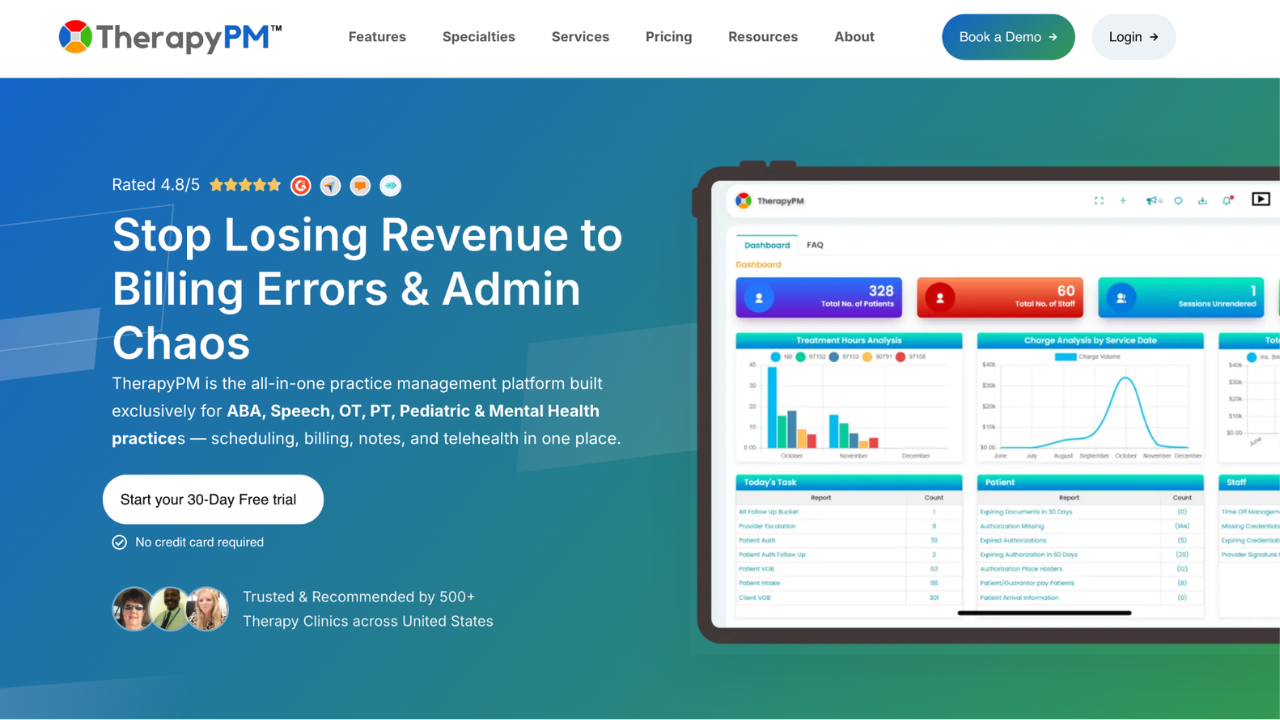
What Services Does TherapyPMS Provide?
TherapyPMS is an all-in-one platform covering ABA, occupational therapy, speech therapy, mental health, and pediatric therapy practices across the US and Canada. They combine credentialing, billing, telehealth tools, and accounts receivable services in a single system. The platform reports a 99% success rate in maximizing reimbursements and cash flow (not a small claim, but the kind of number that gets a billing manager’s attention), and it currently serves over 500 clinics. Their compliance stack includes SOC-2, HIPAA, and GDPR certifications.
What Sets TherapyPMS Apart for Top ABA Billing Software?
TherapyPMS targets a problem that multi-discipline therapy practices run into constantly: billing tools that work fine for one service type but break down when you’re coding across ABA, speech, and OT in the same week. Their therapy-specific workflow design keeps billing aligned with the actual clinical structure of mixed-discipline practices.
Real User Sentiment:
The 500+ clinic user base says something real about how broadly TherapyPMS has been picked up across practice types. From what the data shows, the platform earns trust particularly from practices that need billing and credentialing handled together rather than through separate vendors. Specific third-party review depth is limited, but the footprint speaks for itself.
4. Raven Health – Best for ABA Therapy Practices and Behavioral Health Clinics
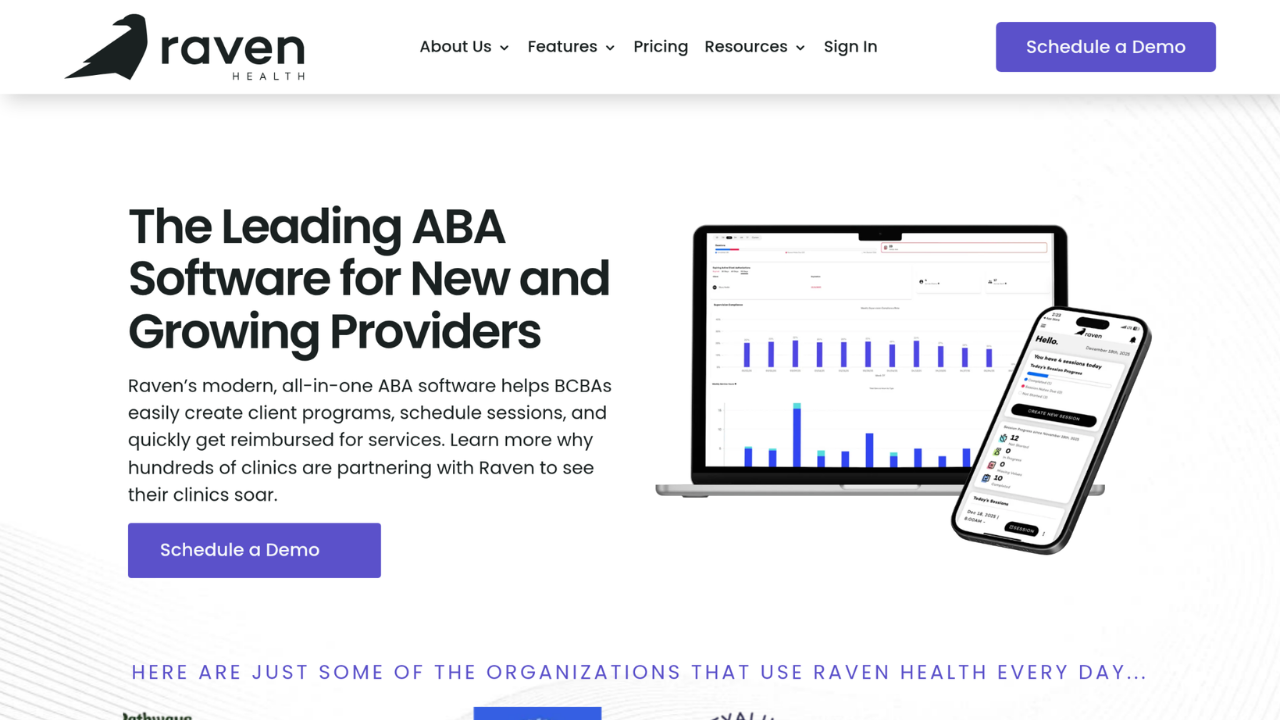
What Services Does Raven Health Provide?
Raven Health builds ABA data collection and practice management software with a mobile- and tablet-first design philosophy. Their platform covers data synchronization, offline data collection, treatment plans, progress tracking, and billing services for clinicians, clinical directors, and administrators. The standout feature of their pricing model is that the software itself is free, with payment only triggered on collected claims. That structure flips the usual risk approach in a way that smaller or newer practices will find genuinely appealing. Their partnership with Flychain rounds out the financial operations side.
What Sets Raven Health Apart for Top ABA Billing Software?
Raven Health focuses on a very specific friction point: the time it takes a new clinician to learn a billing and data collection tool. They’ve brought that learning curve down to under 15 minutes through intentional interface design. Based on the research, that usually means less time lost to training and more billable hours captured from day one.
Real User Sentiment:
Raven Health is newer to the market (founded 2020), so the review footprint is still building compared to platforms like CentralReach or Rethink. What does surface consistently points to a clean, fast interface and a pricing model that feels honest. The free-to-start approach naturally draws practices that want to test before committing.
5. Rethink Behavioral Health – Best for ABA Clinics and Pediatric Therapy Providers
What Services Does Rethink Behavioral Health Provide?
Rethink Behavioral Health combines clinical tools, billing, scheduling, data collection, and staff training in one platform built by clinicians for clinicians. They serve over 2,000 customers worldwide, with 1,500+ customizable care plans available out of the box. One standout is their Medical Necessity Assessment tool, which has reached 87% average agreement with clinician assessments across 23,000+ completed evaluations. That’s a legitimate credibility signal for practices dealing with payer scrutiny on medical necessity documentation (think prior authorization denials).
What Sets Rethink Behavioral Health Apart for Top ABA Billing Software?
Rethink tackles one of the more expensive problems in ABA billing: medical necessity disputes that delay reimbursement or trigger full denials. Their patent-pending Medical Necessity Assessment tool gives practices a defensible, data-backed foundation for every authorization submission, which directly improves authorization utilization rates.
Real User Sentiment:
From what the data shows, Rethink earns respect from BCBAs and clinical directors who want tools built by people who actually understand behavioral health workflows from the inside. The training component gets positive mentions too, which makes sense given that staff training and clinical compliance go hand in hand. The 2,000+ customer footprint across a platform founded in 2007 shows real staying power.
How These Were Chosen and Verified
Data Collection Process
The process started by pulling together a broad list of ABA billing and practice management platforms from multiple sources, including software directories, behavioral health industry publications, and community forums where ABA practice owners and billing managers share tool recommendations. Product feature pages, pricing structures (where publicly available), and platform descriptions were all collected as initial inputs. The goal at this stage was breadth, not selectivity, so the initial pool was kept wide before any filtering happened.
The Shortlisting Pass
From that initial list, platforms without verifiable presence in the ABA or behavioral health space were set aside. This pass focused on review patterns across multiple sources rather than single-platform ratings, since a high score on one directory doesn’t mean much without corroboration. Platforms where user reviews suggested real gaps in ABA-specific functionality, like missing CPT code support or weak authorization tracking, were removed at this stage. The remaining candidates showed consistent recognition across at least two independent sources.
Verification Pass
Each shortlisted platform was then checked by comparing what the official website claims against what actual users report. This included looking at whether stated features like offline data collection, real-time sync, or denial management show up in review comments and case study outcomes. Where a platform made a specific performance claim (such as TherapyPMS’s 99% reimbursement success rate), external corroboration was sought before including it as a detail.
Industry Recognition and Authority
Recognition signals were factored in beyond just star ratings. Awards from established technology and healthcare organizations, mentions in industry publications, and placement on growth or recognition lists were all treated as supporting evidence of a platform’s standing. CentralReach’s Deloitte Technology Fast 500 placement and multiple workplace recognition awards are examples of the kind of third-party validation that carries weight here. Longevity also mattered: a platform operating since 2007 or 2012 in a specialized niche tells its own story.
Evidence Specific to Top ABA Billing Software
The final filter applied to each platform was whether it shows clear, dedicated evidence of serving ABA billing workflows. This meant looking for things like ABA-specific CPT code support, connection between scheduling and billing modules, documentation of denial management features, and case studies or testimonials from BCBA-led practices. Generic healthcare platforms without this evidence were excluded regardless of their broader reputation. Only platforms where the ABA billing use case was a defined and documented part of the product made the final list.
What to Look For When Choosing Top ABA Billing Software
Choosing an ABA billing platform comes down to more than feature count. The right fit depends on how well the tool matches your practice’s specific payer mix, team structure, and growth stage. Here’s what actually matters when you’re evaluating your options.
- Industry/Domain Experience: Look for platforms built specifically for ABA or behavioral health, not generic medical billing tools repurposed for therapy. ABA-specific CPT code logic, authorization tracking, and supervision ratio support aren’t add-ons; they need to be central to how the system works.
- Features and Service Offerings: Billing should connect directly to scheduling and clinical documentation. If those modules don’t share data in real time, you’re creating manual reconciliation work that leads to claim errors and delayed reimbursements.
- Pricing Structure: Understand whether pricing scales with your claims volume or your headcount. Some platforms charge per billable hour, others per provider. Know which model fits your current size and where it goes as you grow.
- Results Measurement: Any credible platform should give you visibility into your clean claims rate, denial rate by payer and CPT code, and days in A/R. If you can’t measure it, you can’t fix it.
- Industry Knowledge and Compliance: HIPAA and payer compliance aren’t optional, but the bar goes higher in ABA. Look for platforms that stay current with Medicaid billing rule changes and state-specific payer guidelines without requiring your team to manually track every update.
Final Take
ABA billing is genuinely one of the harder billing environments in healthcare, and the right software makes a real operational difference. CentralReach dominates at scale. Theralytics stands out for practices that want clinical and billing workflows fully synchronized from day one. Rethink brings clinical credibility, and Raven Health offers a low-risk entry point for smaller practices. As payer rules keep shifting and Medicaid policies continue to change state by state, the practices that invest in purpose-built tools now will carry a measurable advantage in the future.
Want to unlock greater wellness?
Listen to our friends over at the Wellness + Wisdom Podcast to unlock your best self with Dr. John Lieurance; Founder of MitoZen; creators of the ZEN Spray and Lumetol Blue™ Bars with Methylene Blue.






 Weekly Meal Plan – 6/26/15