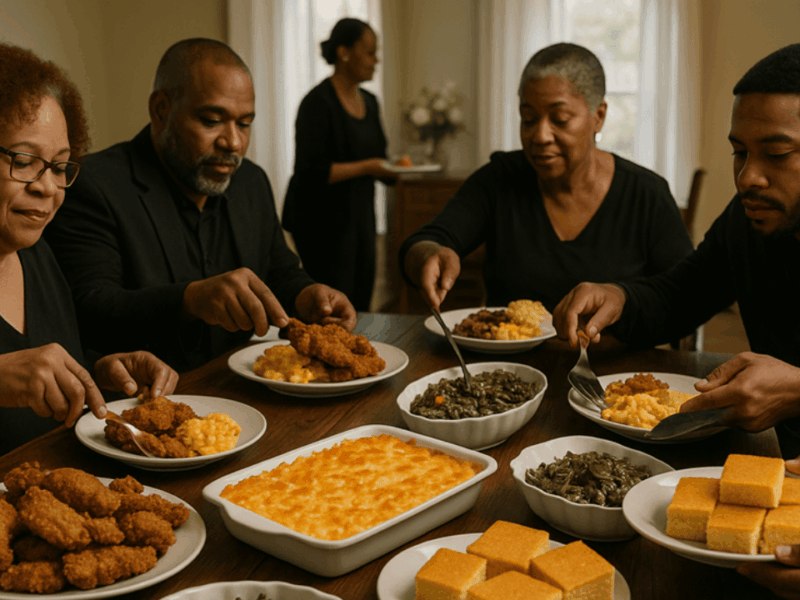
In Black communities, food has always been part of every joy and every sorrow. It speaks when hearts are too heavy for words. It reminds people that even in loss, love is still present at the table.
Funeral food carries comfort in familiar flavors. The smell of fried chicken, baked macaroni, and warm cornbread fills the air like memory itself. Each dish holds a story of who cooked it, who taught it, and who was fed by it. And in that exchange, grief feels a little lighter.
These meals are not fancy or forced. They are made with heart, patience, and purpose. They bring people together and remind them that strength grows from community. So when the food is served, it’s not only a meal. It’s a way to honor life, to gather, and to begin healing together.
Food as a Source of Healing and Togetherness
After a funeral, food becomes a kind of medicine. It doesn’t erase grief, but it helps people bear it. Sitting down to eat brings a moment of stillness when the day feels too heavy. When everyone gathers around the table, sorrow begins to loosen its grip.
In many Black families, sharing food after a loss has always meant more than feeding guests. It’s a way to comfort the living and to celebrate the person who has passed. The act of serving, passing plates, and talking between bites creates space for laughter to return.
Cooking itself can be part of healing. Stirring a pot or baking a dish gives the hands something to do when the heart hurts. Besides, feeding others is one of the oldest ways to show care, and that care is what carries people through.
The Heart of a Repast: What It Really Means
A repast is more than the meal that follows a funeral. It’s where family, friends, and neighbors come together to breathe again. It’s a space where stories are told, tears mix with laughter, and everyone finds comfort in being close. The food may fill the plates, but the gathering fills the soul.
For generations, the repast has been one of the most sacred parts of saying goodbye. It turns grief into connection and loss into shared strength. It’s where people remember how the loved one lived, not just how they left.
“The repast holds deep emotional weight because it reminds us that life continues through community,” explains Jeffrey Vaynberg, the Co-Founder of Signature Headstones. It’s that shared meal, that act of coming together, that keeps the memory alive long after the day ends.
Classic Black Funeral Dishes That Show Up With Love
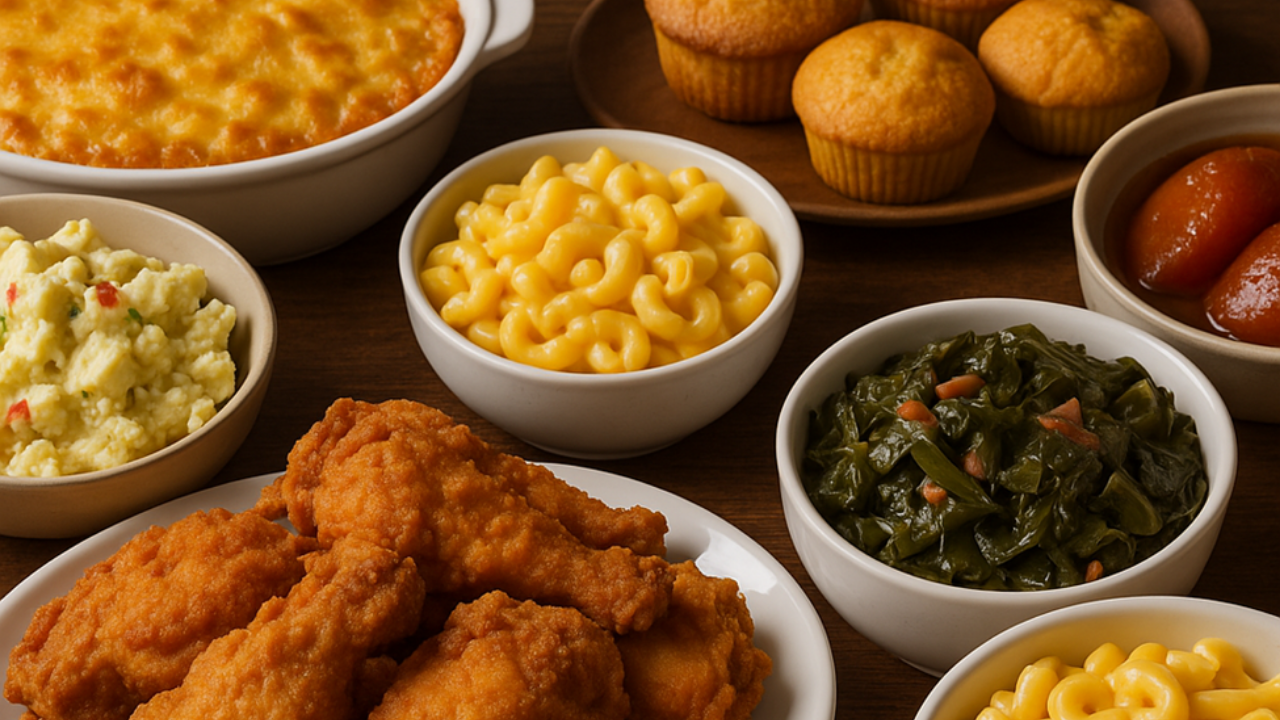
Funeral food in the Black community is not chosen by chance. These dishes come from generations of tradition, shaped by faith, hard work, and love that traveled through kitchens long before anyone wrote down a recipe. They show up because they comfort, they feed, and they remind people of home.
Fried Chicken and Baked Chicken
There’s almost no repast without chicken. Fried or baked, it’s the dish that brings people to the table first. Fried chicken, golden and crisp, speaks to celebration as much as sorrow. The sound of it sizzling in oil has filled Sunday kitchens for generations. It’s served hot, but it’s still good cold, so it travels well to church halls and community centers.
Baked chicken carries a different kind of care. It’s lighter, often seasoned with herbs or onions, and made by someone who knows how to stretch a meal to feed many. Both versions represent comfort that can be shared with a crowd. They remind guests that even in loss, nourishment remains a form of love.
Macaroni and Cheese
Mac and cheese is never just a side. It’s a centerpiece that speaks of pride and skill. Everyone knows who in the family makes the best one. It’s the auntie or grandmother who keeps her recipe close. It’s baked until the edges crisp and the middle turns creamy, rich with layers of cheddar or Velveeta.
At a funeral meal, it’s one of the first dishes to disappear. It’s warm, filling, and familiar, something that says, “you’re home.” The dish also carries meaning. In many Black households, baked macaroni marks a special occasion. Serving it at a repast honors that tradition, turning the meal into both comfort and tribute.
Collard Greens and Cabbage
Collard greens simmer. They need time and patience, which is part of their message. Greens have been a soul food staple for centuries, symbolizing hope and resilience. They’re cooked down with smoked turkey or ham hocks, filling the room with a smell that says someone’s taking care.
Cabbage often sits beside the collards, bringing a softer flavor to the table. It’s inexpensive, easy to prepare, and stretches to feed a crowd. Together, they bring both flavor and meaning, showing how time, effort, and love can change simple ingredients.
These dishes don’t just fill plates. They hold history, connection, and the quiet strength that keeps a community standing through every season of life.
Candied yams bring warmth and sweetness to the table. They balance the heavier flavors of meat and greens with sugar, cinnamon, and a hint of nutmeg. The glaze turns golden in the oven and fills the air with a smell that feels like home. Yams are more than comfort food. They’re a link to the past, one of the crops that traveled with African ancestors and became a symbol of endurance and care.
Cornbread often sits beside them, golden and soft with a crust that crackles slightly. Some bake it sweet, some savory, but every version feels like family. A pan of cornbread on the table carries a simple truth. Everyone is welcome, and no one goes hungry.
Green Beans, Lima Beans, or Black-Eyed Peas
These beans tell stories of both survival and gratitude. Black-eyed peas especially hold deep meaning, tied to faith and hope for better days. They’ve long been served on New Year’s Day for good luck, but at funerals, they bring comfort differently. Each bowl reminds people of shared meals that marked both struggle and celebration.
Green beans and lima beans fill the same role. They’re humble, filling, and rich with flavor when cooked with a bit of onion or smoked meat. They are the quiet dishes, the ones that stay on the table after the laughter fades, reminding everyone that even simple food can carry deep love.
Potato Salad and Deviled Eggs
Potato salad and deviled eggs are the dishes that show up everywhere people gather. Both are easy to share and easy to recognize, no matter who made them. Potato salad can spark friendly debates, mustard or mayo, warm or cold, but no matter the version, it’s expected at a repast. It’s hearty and cool, something that rests easily beside fried chicken or greens.
Deviled eggs carry the same spirit. They’re made by hand and filled with care. A platter of them always disappears first. Together, they represent time spent preparing, not rushing. They remind guests that showing up with food is its own kind of love.
Banana Pudding and Pound Cake
No repast feels complete without something sweet to close the meal. Banana pudding, layered with vanilla wafers and whipped topping, brings nostalgia with every spoonful. It’s the dessert that often tastes like childhood Sundays and kitchen laughter.
Pound cake, dense and buttery, is its quiet companion. It slices neatly, travels well, and always feels right for the moment. Simple, comforting, and steady. Together, these desserts mark the end of the meal with warmth and gratitude, turning farewell into remembrance.
Cooking with Intention: Honoring Legacy Through Food
Cooking for a repast often begins before the day of the service. Someone pulls out a worn recipe card or a cast-iron skillet that has seen decades of use. The food made for that table is rarely fancy, but every dish has a purpose. Each step, seasoning, stirring, tasting, comes from memory and care learned over time.
For many families, these meals connect generations. The same dishes that were served at a great-grandmother’s funeral might appear again today. Recipes pass quietly from one set of hands to another, sometimes changed a little, but always familiar. The flavors stay tied to the people who came before.
Cooking this way is an act of respect. It keeps the person being remembered close. And it gives those still living a way to do something tangible in a moment that feels out of control. Preparing food becomes a steady rhythm that brings calm, order, and a sense of purpose when the rest of the day feels uncertain.
This kind of cooking also teaches patience. It takes time to peel, to simmer, to taste, and to wait. In that slow process, grief finds room to settle. Food then becomes more than a necessity. It becomes a quiet way to honor a life that shaped the table itself.
How to Organize a Repast with Help from the Community
Planning a repast is easier when it happens together. No one should have to carry that weight alone. Family members, church groups, and neighbors often step in to help because feeding others has always been part of showing love.
The first step is choosing where the meal will be held. Many gatherings take place in a church hall, a community center, or someone’s home with space for guests. Once the place is set, the menu comes next. It helps to list dishes that travel well and can be made ahead. Fried chicken, mac and cheese, greens, and desserts like pound cake are all reliable choices.
Ask different people to bring one or two dishes. Assign someone to handle drinks, plates, and utensils. A few volunteers can set up tables and keep food warm. Others can manage the clean-up afterward. When each task is shared, the work feels lighter and everyone can focus on being together.
If money is tight, a community collection or online fund can cover food and supplies. Local restaurants or church kitchens sometimes donate trays or offer discounts. Most people want to help if they know what’s needed.
A well-planned repast doesn’t have to be perfect. What matters is the spirit behind it. When everyone contributes a little time, effort, or food, the gathering becomes something bigger than the meal. It becomes an expression of care, the kind that keeps families and neighborhoods strong even in loss.
Final Thoughts
A repast brings people together in a way few things can. It turns a hard day into one that still holds comfort. The food, the stories, and the quiet moments shared between bites all help people start to heal.
What matters most is not how much food is served but the care behind it. A simple plate made with love often carries more meaning than a table full of dishes. Every bite reminds those gathered that they are part of something lasting.
Traditions like these continue because they work. They give structure to grief and a way to honor the past. When people come together to cook and share a meal, it’s a quiet way of showing love that lasts.
Want to unlock greater wellness?
Listen to our friends over at the Wellness + Wisdom Podcast to unlock your best self with Dr. John Lieurance; Founder of MitoZen; creators of the ZEN Spray and Lumetol Blue™ Bars with Methylene Blue.






 Maple Cinnamon Pecan Ice Cream – Harvest Your Health
