Start With the Lead Time You Actually Need
Most home cooks think of meat as something you grab the day before. Local sourcing does not work that way. A small farm or a local butcher is not running a warehouse. They are running a finite supply chain tied to actual animals. If you want grass finished beef brisket for a Saturday in June, you should be calling in April. Whole hogs and lambs need even more lead time, sometimes three months.
Call your source as soon as you have a date and a guest count range. Even a rough estimate is enough to reserve product. The good farms book out fast during graduation, wedding, and holiday seasons.
Know Which Cuts Scale Well
Not every cut is built for a crowd. Some cook beautifully in small portions but become a nightmare at volume. A few that consistently work well for groups.
Brisket. Forgiving, feeds a lot, holds well, and gets better as it sits.
Pork shoulder. Cheap per pound, almost impossible to overcook, and shreds for sandwiches, tacos, or stuffed peppers.
Whole chickens. Roast them in batches and carve at service. Better flavor than breasts, lower cost, and the bones make stock for the next event.
Beef chuck roast. Braises beautifully, stretches across many servings, and works for paleo, keto, and gluten free guests without modification.
Lamb shoulder or leg. A little more adventurous but a crowd pleaser for the right audience. Pairs well with Mediterranean style sides.
What I avoid for crowds. Filet, ribeye, tenderloin, anything that needs precise temperature control across many portions at once. You will stress yourself out trying to hit medium rare on forty steaks.
Ask the Right Questions Before You Order
When you call your farm or butcher, get clear on these before you confirm the order.
How is it packaged? Vacuum sealed in usable portions or one giant cryovac bag? This matters for thaw time and prep.
Is it fresh or frozen? Most local meat is delivered frozen for quality and food safety. Plan thaw time accordingly. Brisket takes three full days in the refrigerator to thaw safely.
What is the actual weight per portion you should plan? A good rule is half a pound of raw meat per adult for a main protein, less if you are doing a multi protein spread. Your farmer can usually advise based on the cut.
What is the pickup window? Local farms often have set pickup days. Build your prep timeline around their schedule, not yours.
Is it inspected? For private events at your home this is rarely an issue, but if you are hosting at a venue, some require USDA inspected product. Confirm before you order.
The Storage Problem Most Hosts Underestimate
Eighty pounds of frozen meat takes more space than you think. A standard kitchen freezer holds maybe forty pounds comfortably without crushing what is already in there. If your order is larger, you have three options. Pick up the meat closer to the event and thaw immediately. Borrow freezer space from a neighbor or family member. Or rent a chest freezer for the month, which sounds extreme but costs less than you would expect.
Thawing is the silent killer of meat plans. Brisket needs three days. Pork shoulder needs two. Whole chickens need a day and a half. Build a thaw schedule on paper and tape it to the fridge. Trust me on this one.
When to Cook It Yourself and When to Hand It Off
This is where honesty matters. Cooking thirty pounds of brisket on a backyard smoker is not the same as cooking one for Sunday dinner. The timing, the wood management, the resting, the slicing, and the holding all change at volume. If you genuinely love the process and have the equipment, this can be the best part of your event. If you are doing it because you think you should, you are signing up for a fourteen hour day that ends with you too exhausted to enjoy your own party.
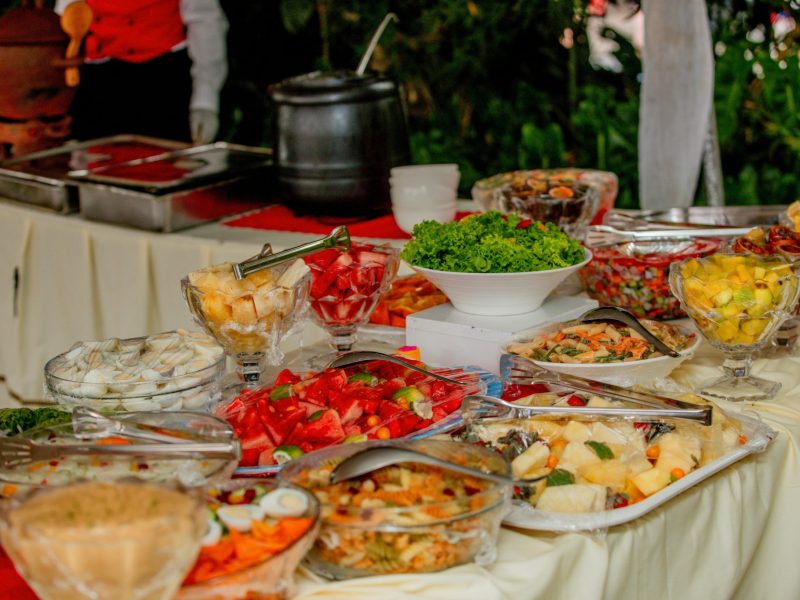
For larger groups or events where the host needs to actually be present, working with local catering services that source from the same farms you would use yourself gives you the quality without the burnout. The best operators in any region already have relationships with local ranchers and will happily build a menu around product they trust. Ask them where their meat comes from. A good caterer will know the farm by name.
Build a Menu That Respects the Meat
Once you have the protein, the rest of the menu should support it instead of competing with it. Simple sides made from real ingredients let the meat be the star. Roasted root vegetables, a big bowl of slaw with apple cider vinegar, a pot of beans cooked in the drippings, a salad with bitter greens and a sharp dressing. Skip the supermarket dinner rolls and the pre made dips loaded with seed oils. The whole point of sourcing locally is to honor the quality of what you bought.
The Real Reward of Doing It This Way
There is something different about feeding people food you can trace back to a specific farm. The flavor is part of it. The story is the other part. When a guest asks where the meat came from, and you can name the ranch and the family that raised it, you are doing something most modern hosts never do. You are reconnecting your table to the land it came from.
It takes more planning. It costs a little more. It is worth it every time.


 The Growing Importance of Quality and Freshness in Meat Products
