
If you’ve ever watched your child behave (or misbehave) while you were out and thought, “They’d never do that at home,” you’re probably right. But you may not have realized there’s a reason they act differently in various environments, and this shift impacts your little one’s learning progress.
The saying, “It takes a village,” isn’t too far off the mark. Raising a child includes teaching them about daily routines, independence, and social communication in various settings. Each of those settings, or environments, carries different contexts for your child that reinforce or delay progress. This is why where your child receives therapy matters so much — how they integrate their skills across varying environments leads to lasting growth.
Knowing Environment is More Than Circumstantial
Did you ever go on field trips as a child? Chances are, if you did, you remember them more vividly than you recall sitting at your desk in class on a routine day. The change in your environment awoke your brain’s processing center, stimulating it to make more lasting memories.
On the other hand, children with autism spectrum disorder (ASD) depend on their environment to be consistent and familiar. Structure plays a significant role in reducing anxiety and helping a child to manage sensory overload. When they can predict what will happen around them, they feel safer, allowing them to focus on learning new skills at a controlled pace.
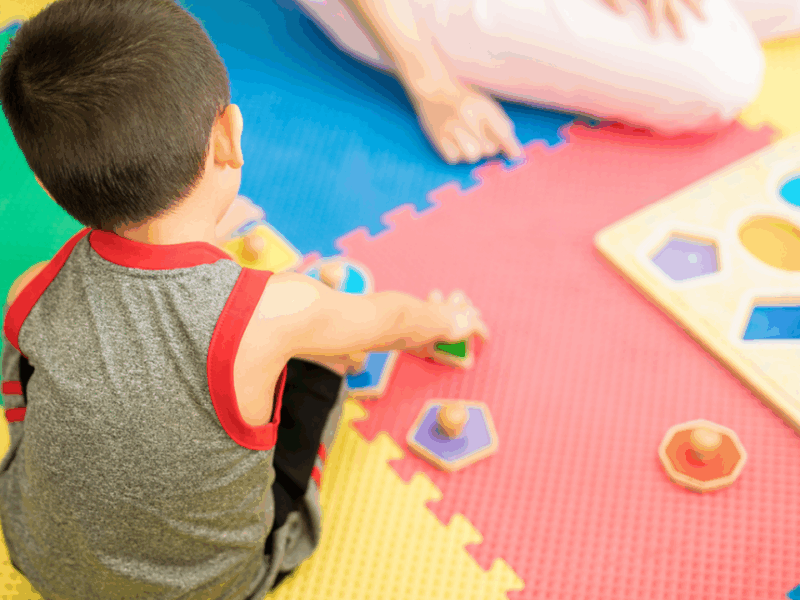
Choosing your child’s therapy environment is a crucial decision. You might assume they’d be happier at home, in their familiar rooms. However, an Applied Behavior Analysis (ABA) therapy center can offer structured routines, sensory-friendly spaces, and learning opportunities specifically designed for children who need that type of environment to thrive, giving them the additional benefit of learning to act appropriately in different settings. To learn more about the pros and cons of center versus home-based ABA therapy, read this article by BehaviorSpan.
Adjusting the Environment to Improve Progress
What exactly is it about the environment that makes such a distinct impact on children with ASD?
At its core, your child’s behavior depends on their sense of safety. Familiar, sensory-calming environments where the people around them speak warmly and softly let your little one’s brain let go of worry and anxiety, giving them more awareness to focus on what you’re trying to teach them.
Factors such as the tone of voice others use in the room, relational connections, and the child’s stress levels can negatively or positively impact progress. The better you can control these factors, the better you can predict your child’s openness to learning at that moment.
Making small changes to the space they’re in, such as pointing them to a safe corner to go to if they feel overwhelmed or bringing in familiar objects to remind them of routines, can help reduce anxiety and, therefore, challenging behaviors that come with unfamiliar environments.
Consistency and routine help guide your child as their world opens to new learning lessons, but it’s not always possible to have this type of structure. Working with your child’s therapist or educator can ensure you’re all on the same page with introducing new situations and environments that might add stress.
Controlling Your Child’s Environment When You’re Not Around
If we could only keep our children completely protected in a bubble where we controlled everything in their environment, wouldn’t it be perfect? Well, not necessarily. While they’d be safe, we’d be limiting their growth potential. But you still want to control their environment as much as possible, even when you’re not around.
You can do this, to a degree, by staying in contact with your child’s therapists while they’re at their learning center. Collaborate with them to ensure you understand the therapeutic language they use so that you can reinforce it with your child at home and in other settings. Set and attend regular meetings to discuss concerns and progress, and encourage your child’s therapists to communicate with you if they have any feedback.
No matter who is around your child, it’s vital that your little one learns how to regulate their emotions independently when they are capable of doing so. Teach them coping strategies, such as mindful breathing and labeling their emotions. When you pick them up, ask them if they had to use any strategy. Use this as a discussion board to build from, so they know how to handle it if they’re in that situation again.
Conclusion
Between busy schedules, school, shared custody, and the general hectic pace of life, it isn’t always possible to control your child’s environment. But with communication between you and the therapists, as well as a developmentally-appropriate introduction to coping strategies, you provide them with the best possible growth opportunities.
Want to unlock greater wellness?
Listen to our friends over at the Wellness + Wisdom Podcast to unlock your best self with Dr. John Lieurance; Founder of MitoZen; creators of the ZEN Spray and Lumetol Blue™ Bars with Methylene Blue.






 Why a GPS Tracker Can Support Travel and Personal Safety
