Most wellness advice starts with the same handful of suggestions. Meditate. Journal. Run. Go to therapy. All of it works, and all of it is also slightly exhausting to hear for the hundredth time.
What gets overlooked is that the brain responds powerfully to a different kind of input: focused, skill-based activity that sits outside the usual self-improvement frame. The kind of thing where you can’t think about your inbox because you’re physically learning to do something new. Below are seven hobbies that quietly do the work most people are paying a meditation app to do, and a few of them might surprise you.
1. Archery
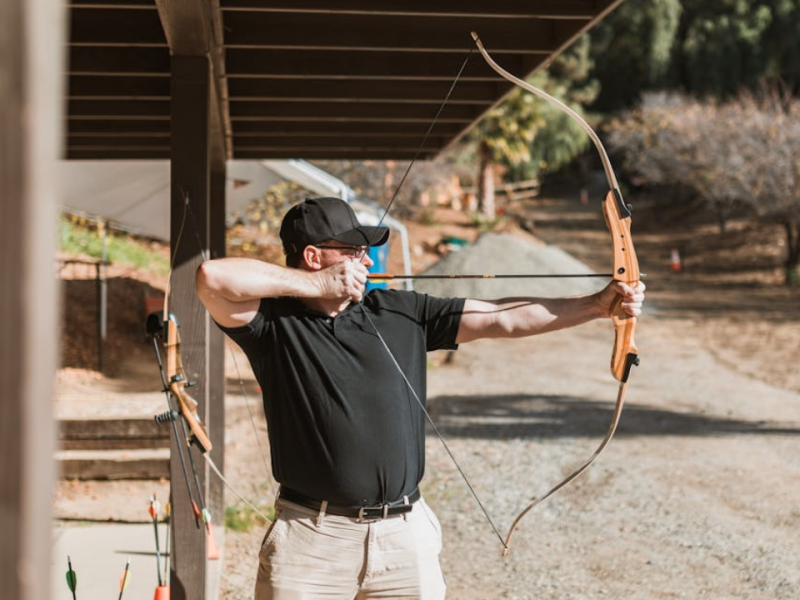
Standing on a line, drawing a string, and putting an arrow exactly where you wanted it requires a kind of attention that’s almost impossible to fake. You can’t be half-distracted and shoot well. The breath has to settle, the body has to align, and the mind has to clear for a few seconds at a time. Archers describe it as the closest thing to active meditation in any sport.
It’s also approachable in a way most people don’t realize. A few beginner-friendly archery classes are usually enough to get the basics of stance, anchor, and release down. After that, an hour at the range becomes one of the most settling things in your week.
2. Skateboarding (Yes, in Your 30s)
People assume skateboarding is for teenagers. The truth is that adult skateboarders have quietly become one of the largest growth groups in the sport, and for good reason. Skateboarding forces you out of your head. You can’t spiral about a work email while trying to land an ollie. The learning curve is steep enough that progress feels real, and the physical demand is just intense enough to wear out the part of your brain that won’t shut up at night.
The myth that you can’t start as an adult is just that. Structured skateboarding lessons for adults cover the same fundamentals kids learn but adjusted for grown-up bodies and grown-up risk tolerance. Most beginners can ride comfortably within a few weeks.
3. Pottery
Working clay on a wheel is one of the few activities where the material itself enforces presence. If your mind drifts, the pot collapses. If you grip too hard, it goes off-center. The hands and the breath have to find a rhythm together. It’s also tactile in a way modern life rarely is, and most people leave a class with both a finished piece and a notably calmer nervous system.
4. Bird Watching
The hobby everyone makes fun of until they try it. Birding rewires attention because it requires sustained, low-key looking. You start noticing things you walked past for years. The sound of a yellow-rumped warbler. The way light hits a hawk on a fence post. Doctors who study attention have started recommending it for patients with anxiety because the mechanics of it are almost identical to mindfulness practice, except you’re outside and looking at something specific.
5. Chess
Not the speed chess everyone plays online at midnight. Real chess, played slowly, against a real opponent, with no clock running. It builds the muscle for thinking several steps ahead and tolerating uncertainty without forcing a decision. People who pick it up in adulthood often find it bleeds into the rest of their lives, particularly the ability to sit with a hard problem instead of reaching for a phone.
6. Bouldering
Climbing without ropes, on shorter walls, with thick mats below. The reason it works as a focus practice is that the consequences are immediate. You either solve the problem on the wall or you fall off. The whole brain narrows to the next handhold, the next foot placement, the next move. People who have tried both routinely say bouldering does more for their anxiety than the gym ever did, and they enjoy it enough to actually keep going.
7. Learning a Musical Instrument After 30
The neuroscience here is genuinely impressive. Adults who pick up a new instrument show measurable improvements in working memory, executive function, and emotional regulation within months. Pick the instrument that interests you, not the one that seems most useful. You’ll practice an instrument you love. You won’t practice one you chose because someone said it was good for your brain.
What These Hobbies Have in Common
Every activity on this list shares three traits. The first is real-time feedback. You know immediately whether you did it right. The second is a skill ceiling high enough that you’ll never master it, which keeps the brain engaged for years rather than weeks. The third is a kind of forced presence. You can’t half-do any of them while scrolling.
That combination is essentially what every wellness app is trying to manufacture, and what these hobbies deliver as a side effect of just being themselves.
How to Actually Start
The most common reason people don’t pick up a hobby like these is the cold-start problem. The first session feels intimidating, the gear is unclear, and there’s no obvious entry point. The fix is almost always a beginner class. One afternoon with an instructor compresses what would otherwise be months of solo fumbling, and it usually costs less than a month of streaming subscriptions.
Pick one this week. Book the class before you can talk yourself out of it. Most people who do report a noticeable shift in mood and focus within a month, and a hobby that’s still going strong years later.
Want to unlock greater wellness?
Listen to our friends over at the Wellness + Wisdom Podcast to unlock your best self with Dr. John Lieurance; Founder of MitoZen; creators of the ZEN Spray and Lumetol Blue™ Bars with Methylene Blue.






 What Are Implant-Supported Dentures and How Do They Work?
