

The Overtraining Trap
You are on a clean paleo diet and doing regular workouts, but are not moving. Muscle building is slow, pain persists, sleep is not as good and body fat returns notwithstanding training. This is not a motivation problem but it is a recovery imbalance.
The majority of athletes are convinced that the larger the volume the larger the results. Adaptation however, does not take place during training but it happens after training. The body will cease responding unless it is given enough time to recover, however hard one pushes.
The lost factor in most paleo athletes is cortisol control. When applied appropriately, yoga is a recovery aid that can be used to restore hormonal balance and make training fruitful. It provides circumstances in which adaptation needs to take place.
Cortisol and Athletic Performance
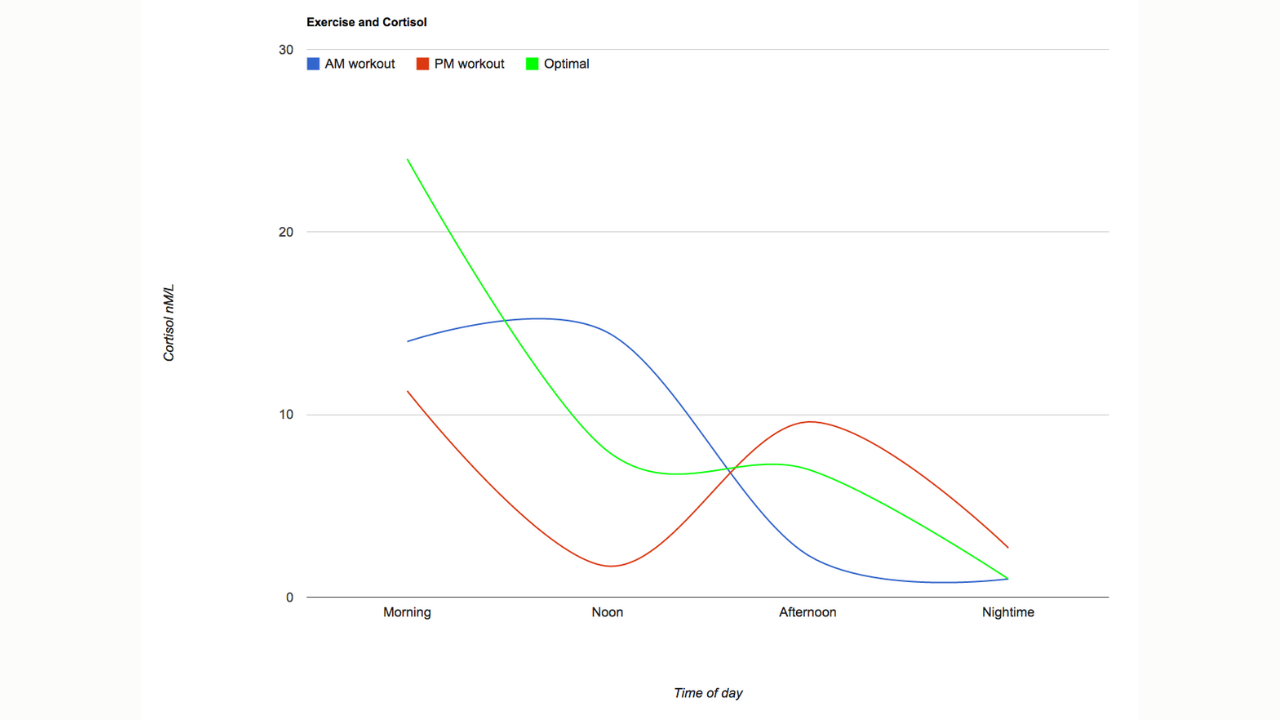
Cortisol patterns across the day show how workout timing influences stress hormone balance and recovery.
Why Cortisol Is Necessary
Cortisol is not the enemy. It activates energy, concentration, and helps to adapt in the process of training. High-intensity exercise would not be possible in its absence.
All strength training, HIIT, and CrossFit will use cortisol spikes to stimulate output. Shorter elevation is needed for performance and fuel consumption. The body receives this stress signal that it is time to adapt.
When Cortisol Becomes a Problem
The issues are with cortisol being high during non-training periods. Combining work and stress with regular very vigorous workouts and lack of sleep does not allow the nervous system to rest.
The persistent increase places the body in survival mode. Breakdown of muscle, decrease in testosterone and accumulation of fat especially around the abdomen increase.
The quality of sleep becomes worse, immunity weakens, and the speed of repair of connective tissues decreases. The harder one trains in such conditions the deeper the plateau will be and the more dangerous.
The Modern Stress Stack
Increasing numbers of athletes add stress upon themselves throughout the day. There is a spike in the cortisol after early-morning workouts, a maintenance of cortisol by work pressure and another spike by evening training.
Cortisol cannot reset because of poor sleep. The cycle occurs every day, and the nervous system is overworked with no possibility of recovery, despite the rationality of training volume.
Why Paleo Nutrition Is Only Half the Equation
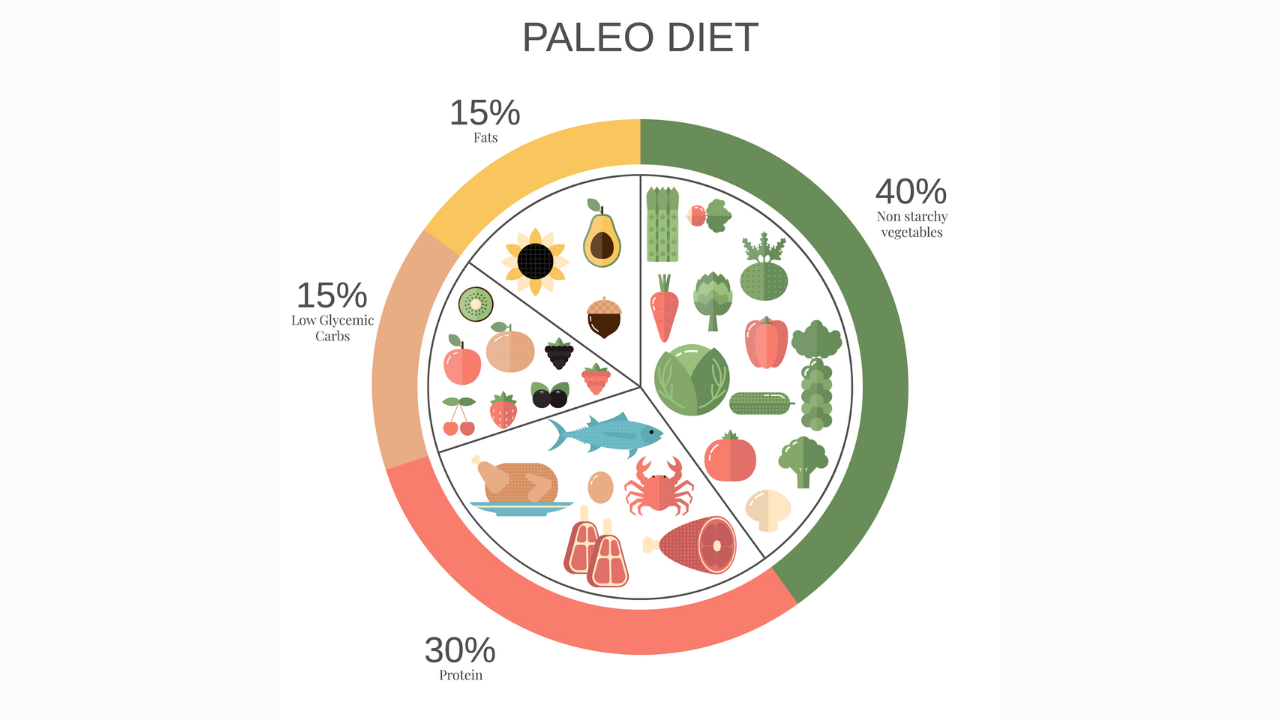
A balanced paleo plate emphasizing non starchy vegetables, quality protein, healthy fats, and low glycemic carbohydrates for metabolic stability and recovery.
What Paleo Does Well
The paleo diet eliminates inflammatory foods and even regulates blood sugar. The changes enhance potential of recovery and aid hormonal wellbeing.
Affordable cock is important, and low-fat content is important. Nevertheless, stress hormones cannot be effectively controlled through nutrition in cases where the nervous system is still overacted.
The Recovery Gap
Food is known to deal with metabolic stress and it does not inactivate the sympathetic nervous system. Stresses of training, mental pressures and stimuli in the environment are not counteracted.
Sportsmen could not afford to work the same muscles every day without relaxation. However, there are many individuals who continue applying a consistent load to their nervous systems not consciously accommodated with regard to recovery measures.
Where Yoga Fits
This is where yoga comes in, by engaging recovery processes. It alters the body to parasympathetic preeminence allowing repair.
This is not leisure to relax. Recovery is part of the physiological support of further progress and the sustainability of training.
How Yoga Lowers Cortisol
Parasympathetic Activation
Recovery-oriented yoga decelerates the breathing and heart rate. This triggers the parasympathetic nervous system which is commonly known as rest-and-digest mode.
In cases when this system prevails, cortisol production decreases. The repair of the muscles, digestion and immune functions also improves.
Vagal Tone and HRV
The vagus nerve is one of the main regulators of recovery triggered by yoga. Vagal tone is enhanced leading to more heart rate variability that is closely associated with athletic preparedness.
An increase in HRV implies a quicker inter-session recovery. It also demonstrates greater endurance to both training and life stress.
Sleep Quality and Growth Hormone
Evening yoga enhances the depth and duration of sleep. The deep sleep causes the release of growth hormone, which is imperative in muscle repair and fat burning.
Sleep improves the effects of recovery. The sleeping athletes are found to recover quicker, control their hunger better and train in a more regular way.
Yoga as a Recovery Modality
Post-Workout Application
Ten to fifteen minutes of yoga after training improves mobility while tissues are warm. This reduces stiffness without adding mechanical stress.
Breathing during this window immediately reduces cortisol. Recovery starts sooner, not hours later.
Evening Recovery Sessions
Evening yoga 20-40 minutes of easy yoga will reduce cortisol levels prior to bedtime.
This enhances restocking and next-day preparedness.
This is the most effective time for regulating the nervous system. Consistency here produces measurable performance benefits.
Rest Day Integration
It is better to have longer rest days and sessions to restore the range of motion in the joint, circulation, and the balance of the nervous system. The sessions are a form of conditioning the body for the subsequent training cycle.
Rest days are not optional. They are strategic components of long-term progress and athletic longevity.
For athletes looking to systematically integrate yoga into their training cycles, working with recovery-focused programs can provide the structure needed to optimize both performance and hormonal balance.
The Soul of Yoga philosophy emphasizes the interconnection between mindful movement and athletic recovery, offering frameworks that complement high-intensity training protocols while respecting the body’s need for parasympathetic restoration.
Addressing the “Yoga Is Soft” Objection
Why That Assumption Fails
Yoga does not replace strength training. It enables it by restoring balance and preventing breakdown.
Athletes who ignore recovery eventually plateau or get injured. Elite performers train recovery as deliberately as strength.
Functional Benefits
Yoga improves squat depth, overhead stability, and spinal mechanics. It reduces compensatory patterns that lead to chronic pain.
This is movement quality training. Better movement equals better force output and reduced injury risk.
Paleo and Yoga as a Performance Pair
Hormonal Synergy
Paleo nutrition promotes insulin resistance and testosterone. Yoga also reduces cortisol and increases the quality of sleep.
Combined, they produce an ideal hormonal environment to promote long-term weight gain and weight loss.
Inflammation Control
Paleo reduces inflammatory input from food. Yoga reduces inflammatory stress responses from training and life.
This dual approach accelerates recovery and adaptation more effectively than either strategy alone.
When Structured Training Matters
Moving Beyond DIY Recovery
Basic recovery yoga can be self-guided. Athletes who experience injuries or chronic pain or their plateaus are not always resolved with a surface-level approach.
To ensure performance intent and safety among athletes, coaches and trainers who incorporate yoga in programming must have organized education.
Recovery Is Training
The Performance Shift
Your body adapts when stress is followed by recovery. Without recovery, training breaks you down instead of building you up.
Yoga is not about becoming calm. It is about becoming stronger by restoring balance.
Train hard. Recover harder.
Want to unlock greater wellness?
Listen to our friends over at the Wellness + Wisdom Podcast to unlock your best self with Dr. John Lieurance; Founder of MitoZen; creators of the ZEN Spray and Lumetol Blue™ Bars with Methylene Blue.






 5 Ways to Fix Common Food Spoilage Problems
